
Day Boarding vs Regular School: Which Is Better for Your Child?
Summary
A child’s academic needs, daily routine, academic support, co-curricular interests, and family schedule will be used to decide whether day boarding or regular school will be implemented. Parents visiting the school in Jind or other places in Haryana should also consider the top schools in Haryana for their children, apart from comparing the timing of the school, facilities, activities, support for students in the school, distance from parents’ home, etc.
Introduction
Parental choice of school is one of the most significant decisions they make. Academic factors, as well as school hours, learning support, activities, school routine, and travel distance, can affect a child’s overall school experience.
Day boarding may be an avenue to consider for families looking at the top boarding schools in Haryana. But a “regular school” can be as effective for children who prefer a schedule with earlier dismissal times and more time at home. Knowing the difference can help make a hands-on decision for parents.
What’s the difference between day boarding and regular school?
A standard school follows a regular school day, and then the students go home. Most family activities, hobbies, revision, and homework are done outside school hours.
Day boarding schools provide a longer school day. Students can be given extra time for supervised study, sport, co-curricular activities, projects, or other structured activities before they return home.
Day boarding does not mean that students stay at school overnight. It is a school day that has been lengthened in a boarding school, with the option of returning home at night.
Day Boarding vs Regular School: Key Differences
| Factor | Day Boarding School | Regular School |
| School Hours | Usually longer and more structured | Generally follows standard school hours |
| Learning Environment | More time for supervised learning and activities | Academic learning is mainly completed during regular hours |
| Academic Support | Additional time may be available for revision, projects, or supervised study | Students generally continue academic work at home |
| Co-curricular Activities | More time can be allocated to sports, clubs, arts, and activities | Activities are usually scheduled within or after regular school hours |
| Convenience for Parents | Can reduce the need to arrange separate after-school supervision | Parents manage the child’s routine after school |
| Student Routine | Longer, structured school-day routine | More flexible time at home |
| Overall Suitability | May suit children who benefit from structured schedules and extended school support | May suit children who prefer a conventional school routine and more home time |
Benefits of Day Boarding Schools
Some children may benefit from having extra hours of formal education at school to balance their time.
1. Increased Structured Learning Time.
Extra hours of school can be used for revision, solving errors, reading, projects, and supervised work but not make evening school time too academic.
2. More Opportunities for Activities
An extended school day may enable students to be involved in sport, music, art, clubs, competitions, and extra-curricular activities.
3. Consistent Daily Routine
A predictable day may be easier to manage for children who do well with routine. Consistency can be established by regular study, meals, activities, and breaks.
4. Useful for Working Parents
A “Day Boarding” model can offer parents a full workday of supervised activities over a longer window of time and still allow the child to be at home during the evening.
Benefits of Regular Schools
There are also a number of advantages to regular schools, especially for children who appreciate flexibility outside the school environment.
More time at home: Children spend more time at home, enjoy hobbies, and are able to do more independently.
Shorter school days: The day may be shorter for younger children or those who are tired after long school days.
Flexible learning after school: Parents have the choice of tuition, sports, music, and other extracurricular activities to choose from based on the children’s interests.
Family involvement: Parents are more involved in their children’s homework, reading, and other extracurricular activities.
Which school to send your child to?
No one-size-fits-all approach to school structure works for all children. Parents should take into account the child’s personality, school needs, and family habits.
If Your Child: Consider Day Boarding:
– Follows a daily routine.
– Requires further academic direction/supervised learning.
– Is interested in sports and other co-curricular activities.
– Can easily handle a longer school day.
– Needs supervision as parents are busy at work.
Consider a Regular School If Your Child:
– Wants to spend more time with family.
– Has organized outside of school activities.
– Can be used independently with parental support.
– Does not have a shortage of sleep during school hours.
– Enjoys flexible after-school hours.
What Parents Should know Before selecting a School?
Parents should not only consider a school that is a top boarding school in Haryana, day boarding school near me, boarding schools near me, or a co-ed senior secondary school, but should also consider the school model.
Keep these practical points in mind:
Academic approach: To have an understanding of how the school meets different learning needs.
– School timings: See the full timetable for activities and study periods.
– Distance travelled to and from school: A long journey to and from school may impact a child’s energy level and routine.
– Activity: Review the sports, arts, clubs, and interests available.
– Student support: Inquire about mentoring, doubt solving, counselling, and individual support.
– School Environment: Walk through and check classrooms, facilities, discipline, and student interaction.
– Parent-school communication: Assess how often parents are informed about academic and/ or students’ progress.
When students are looking at schools in Jind, Haryana, these can be used as a guide for selecting the best-fit school for their child. While parents are looking for a Best school in Jind, Haryana, they should not just consider the ranking or label of the school, but also take the overall suitability into consideration.
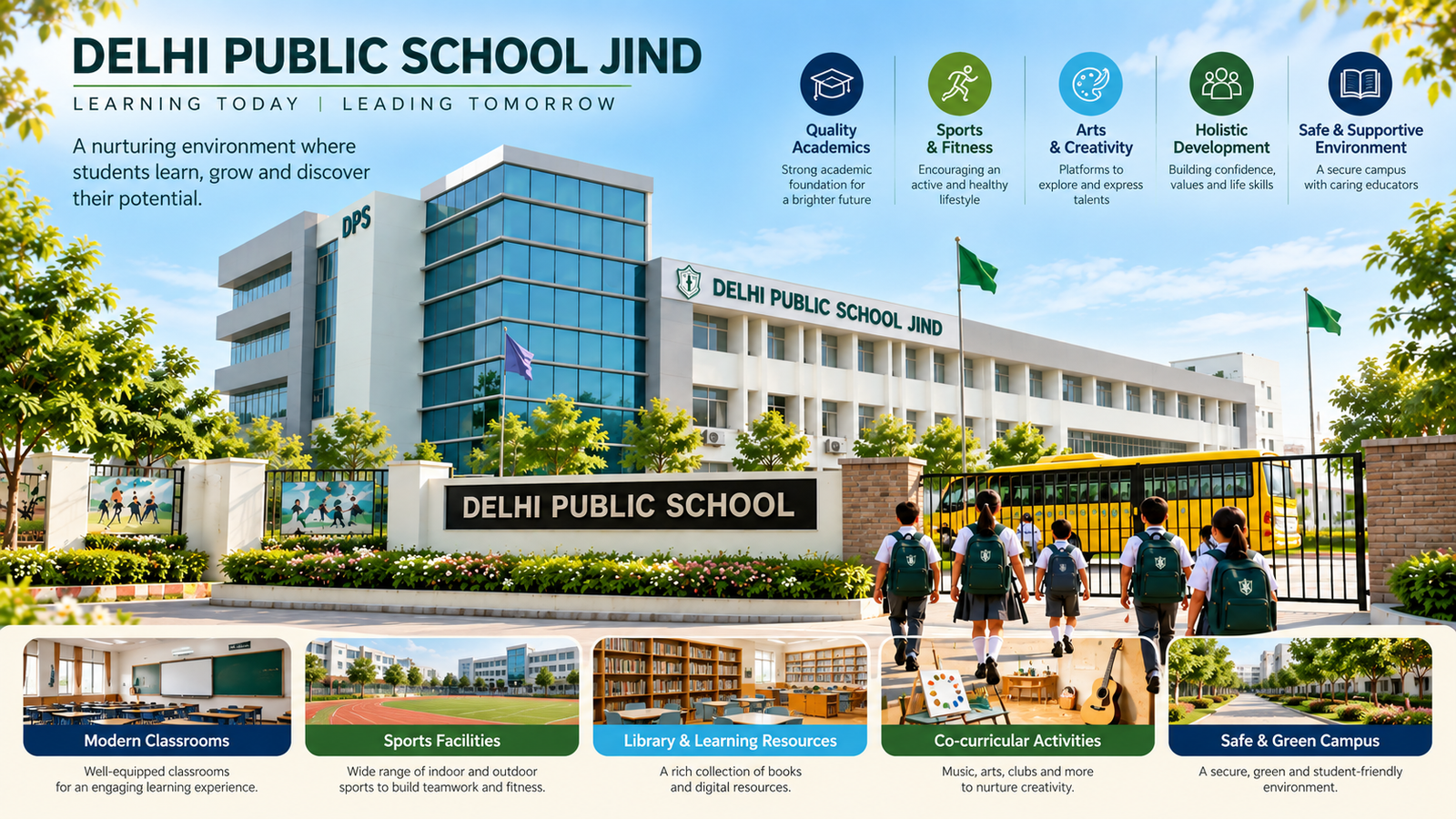
Likewise, parents looking for particular Top boarding schools in Haryana, like Delhi Public School Jind, Haryana, should have a look at the school’s current curriculum, facilities, activities, admission criteria, and school timings before taking a decision!
Conclusion
The choice between day boarding and regular school depends on what is best for the child and family. top boarding schools in Haryana may offer longer, structured learning sessions and/or structured activities, while regular schools may allow more flexibility in the time spent away from school.
Parents should take into account the school hours, the academic support provided, school activities, distance from home, and the child’s individual needs when making a decision. The school environment should be conducive to the child learning in a comfortable setting, developing confidence, and having a balanced school experience.
You can also connect with Delhi Public School on social media like Instagram and Facebook.
FAQ
1. Does day boarding equal a regular boarding school?
No, day boarding students go home at the end of the day, and boarding students stay on campus.
2. Are day boarding appropriate for younger children?
Yes, but if the child is OK with more time at school and a set schedule.
3. Is the academic support provided through day boarding greater?
May provide extra study and revision time as opposed to mainstream schools.
4. What would parents have to take into account to decide between day boarding and conventional school?
Take into account the child’s learning needs, schedule, interests, parent availability, and distance to travel.
5. Would co-ed schools be appropriate for children?
A co-ed school can provide opportunities for students to learn and interact in a diverse environment.
6. Before selecting a school in Jind, what should be checked by the parents?
Investigate academics, school facilities, activities, schedules, student services, commute, and the school environment.